

On the morning of November 20, 1820, in the middle of the Pacific Ocean, the first mate of the Nantucket whaleship Essex looked up from mending a damaged boat and saw a sperm whale lying still in the water, about the length of the ship itself, pointed straight at them.
Then it began to swim. It hit the Essex once, dived under her, and came round again. The second blow stove in the bow. Within minutes, a ship that had been hunting whales for more than a year was sinking, and twenty men were left in three small open boats, more than a thousand miles from the nearest land they dared to sail for.
Only eight of them would see home again, and they survived in a way none of them ever fully recovered from. Thirty years later, a young writer who had read their story at sea turned it into Moby-Dick. This is the true story behind the novel, and it is darker than anything in it.
Quick facts
- Ship: the Essex, a whaler from Nantucket, Massachusetts, about 88 feet long
- Sailed: August 12, 1819, with a crew of 21 under Captain George Pollard Jr., 29
- Sunk: November 20, 1820, after being rammed twice by a sperm whale, about 2,000 nautical miles west of South America
- Survivors: 8 of the 21 crew
- How they survived: three months in open boats, and in the end, by eating the bodies of their dead shipmates
- Legacy: the main inspiration for Herman Melville's Moby-Dick (1851)
A ship from Nantucket
In the early 1800s, the small island of Nantucket, off the coast of Massachusetts, was the whaling capital of the world. Its ships sailed for years at a time, hunting sperm whales for the oil that lit the lamps of America and Europe.
The Essex was an old ship by then, launched in 1799 and refitted for a new voyage. She left Nantucket on August 12, 1819, with 21 men aboard. Her captain, George Pollard Jr., was 29. The first mate, Owen Chase, was 21. The cabin boy, Thomas Nickerson, was 14.
The trip started badly. Early in the voyage, a squall in the Gulf Stream knocked the ship onto her side, costing her a topgallant sail and two of her whaleboats. Pollard decided to carry on anyway, and the Essex rounded Cape Horn into the Pacific, where she spent the next year hunting.
November 20, 1820: "We have been stove by a whale"
That morning, the lookouts spotted a group of sperm whales, and three boats were lowered to hunt them. Chase's boat was damaged by the flick of a whale's tail, and he rowed back to the ship to repair it. Pollard's boat and the second mate Matthew Joy's boat had harpooned whales and were being towed away, about two miles off.
So Chase was on deck when he saw the bull whale. He later estimated it at about 85 feet long, much larger than the biggest sperm whales measured today, and it was lying quietly in the water ahead of the ship. Then it swam at them and struck the Essex with its head, hard enough to throw the men off their feet. It went under the ship, surfaced on the other side, and seemed, as Chase described it, to be in a fury. It turned, built up speed, and hit the bow a second time.
The Essex began to go down by the head. Chase and the men aboard just had time to get their damaged boat into the water and grab a few navigation instruments before she rolled onto her side. When Pollard's boat raced back and found the wreck, the captain could hardly speak. "My God, Mr. Chase, what is the matter?" he asked. Chase's reply became the most famous line of the whole story: "We have been stove by a whale."
The fatal decision
The men stayed by the wreck for two days, salvaging food, water and tools, and adding raised sides to the three whaleboats so they could survive the open ocean. On November 22, the twenty men set off in the three boats, led by Pollard, Chase and Joy.
The nearest islands were the Marquesas, to the west, and the Society Islands, which include Tahiti. Pollard wanted to sail for the Society Islands. But the crew had heard rumours that the islanders of the Pacific were cannibals. Chase and Joy argued for sailing south and east instead, to pick up the winds that would carry them to the coast of Chile or Peru: a far longer voyage, but one that avoided islands they feared. Pollard gave way.
It was the decision that doomed most of them. Historians now believe both island groups would probably have been safe. Melville himself later wrote that the men would likely have survived if they had headed for Tahiti.
Henderson Island
After a month at sea, on December 20, the boats reached a small island. The men thought it was Ducie Island; it was actually Henderson Island, an uninhabited speck in the South Pacific. They found a little water and ate birds, eggs and crabs, but there was not enough to keep twenty men alive for long.
On December 26, three men, William Wright, Seth Weeks and Thomas Chappel, chose to stay behind on the island rather than return to the boats. Pollard promised to send help. The other seventeen sailed on the next day.
Into the dark
What followed is one of the grimmest survival stories in maritime history.
The second mate, Matthew Joy, died on January 10, 1821, and was buried at sea. Ten days later, a sailor named Richard Peterson died in Chase's boat and was buried at sea too. But on that same day, January 20, when a crewman named Lawson Thomas died in the boat that Joy had commanded, the starving men did not bury him. They ate him. Over the next days, Charles Shorter, Isaiah Sheppard and Samuel Reed died, and they were eaten as well.
The boats became separated in the dark. On January 29, the third boat, then under Obed Hendricks, lost sight of Pollard's and was never seen again. In Chase's boat, Isaac Cole died on February 10 and was eaten by the survivors.
In Pollard's boat, by early February, there were four men left and nothing at all to eat. On February 6, they did what desperate sailors had sometimes done before: they drew lots to decide who would die so the others could live. The short lot fell to Owen Coffin, who was 18 and Pollard's own cousin. Pollard offered to take his place. Coffin refused, saying he liked his lot as well as any other. He was shot and eaten. Five days later, Barzillai Ray died, and he too was eaten by the last two men in the boat, Pollard and Charles Ramsdell.
Rescue
On February 18, 1821, the British merchant ship Indian found Chase's boat with three men still alive: Chase, Benjamin Lawrence and the cabin boy, Thomas Nickerson. Five days later, on February 23, the Nantucket whaler Dauphin picked up Pollard and Ramsdell, ninety-three days after the sinking. They still had the bones of their dead shipmates in the boat.
The survivors were reunited in Valparaíso, Chile, on March 17, 1821. True to Pollard's promise, a rescue was sent for the three men on Henderson Island, and the ship Surry picked them up in April 1821, still alive. In all, eight of the 21 men who had left Nantucket came home.
From the Essex to Moby-Dick
Owen Chase returned to Nantucket on June 11, 1821, and within months had produced a book: the Narrative of the Most Extraordinary and Distressing Shipwreck of the Whale-Ship Essex. It was the first detailed account of the disaster, and it was the version that reached a young sailor named Herman Melville when he went to sea on a whaler himself in the 1840s.
Melville never forgot it. In 1851 he published Moby-Dick, the story of a captain's obsessive hunt for a great white whale that finally rams and sinks his ship. In July 1852, after the novel was out, Melville made a short visit to Nantucket and met George Pollard.
The cabin boy's version took far longer to surface. Thomas Nickerson wrote his own account in 1876, when he was an old man, but the manuscript was lost. It was only found in 1960 and was finally published by the Nantucket Historical Association in 1984. The writer Nathaniel Philbrick later used it, alongside Chase's book, for In the Heart of the Sea, which Ron Howard turned into a film in 2015, with Chris Hemsworth as Owen Chase.
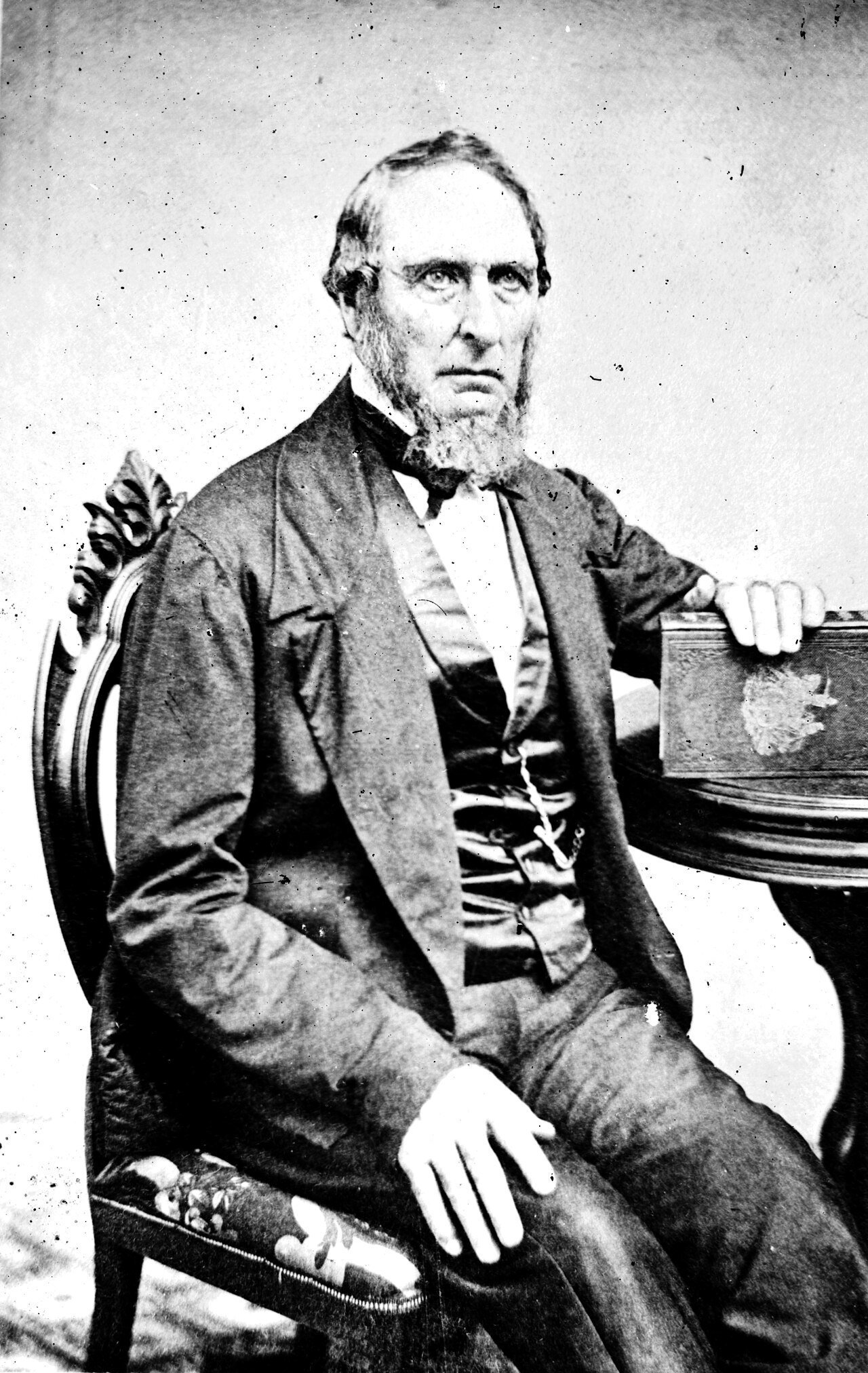
What became of them
George Pollard went back to sea as a captain, on a ship called the Two Brothers, which was wrecked on the French Frigate Shoals near Hawaii. That ended his whaling career. He spent the rest of his life on Nantucket as a night watchman, and every year on November 20, the anniversary of the sinking, he fasted; he is said to have locked himself in his room for the day. He died in 1870, aged 78.
Owen Chase did better at sea, becoming a successful whaling captain and marrying four times. But in later life he was haunted by what he had been through. He is said to have hidden food in the attic of his house, and he spent around eight years in an asylum before his death in 1869, aged 73.
Our take
The Essex is usually told as a story about a whale, but the whale is only the beginning. The real horror is the slow arithmetic of the open boats: a decision made out of fear of cannibals that led the men to become cannibals themselves, and a captain who had to watch his young cousin draw the short lot. It is no wonder Pollard fasted every November 20 for the rest of his life. If Moby-Dick is about obsession, the Essex is about survival, and what it costs.
For another ship whose crew met a terrible end, read the SS Ourang Medan mystery, or the true story of the wreck of the Edmund Fitzgerald. You can also explore real places with dark histories on our haunted places map.
Frequently asked questions
What happened to the whaleship Essex?
On November 20, 1820, the Nantucket whaler Essex was rammed twice by a sperm whale and sank in the Pacific Ocean. Her 20 remaining crew escaped in three small boats; only eight of the original 21 men survived.
Is Moby-Dick based on a true story?
Partly. Herman Melville was inspired by Owen Chase's account of the Essex, a real ship sunk by a sperm whale in 1820, although the plot of Moby-Dick and its white whale are fiction.
Did the crew of the Essex really resort to cannibalism?
Yes. Starving in open boats, the survivors ate the bodies of crewmates who died, and in Captain Pollard's boat the men drew lots to decide who would be killed. Owen Coffin, the captain's 18-year-old cousin, lost and was shot.
How many people survived the Essex?
Eight: Captain George Pollard, Owen Chase, Benjamin Lawrence, Thomas Nickerson and Charles Ramsdell from the boats, and William Wright, Seth Weeks and Thomas Chappel, who were rescued from Henderson Island.
How big was the whale that sank the Essex?
Owen Chase estimated it at about 85 feet long. That is much larger than any sperm whale measured today, so it was probably an overestimate, but it was clearly a very large bull.
Where did the Essex sink?
In the South Pacific, roughly 2,000 nautical miles west of the coast of South America.


Leave a Reply
Your email address will not be published. Comments are moderated before they appear.