

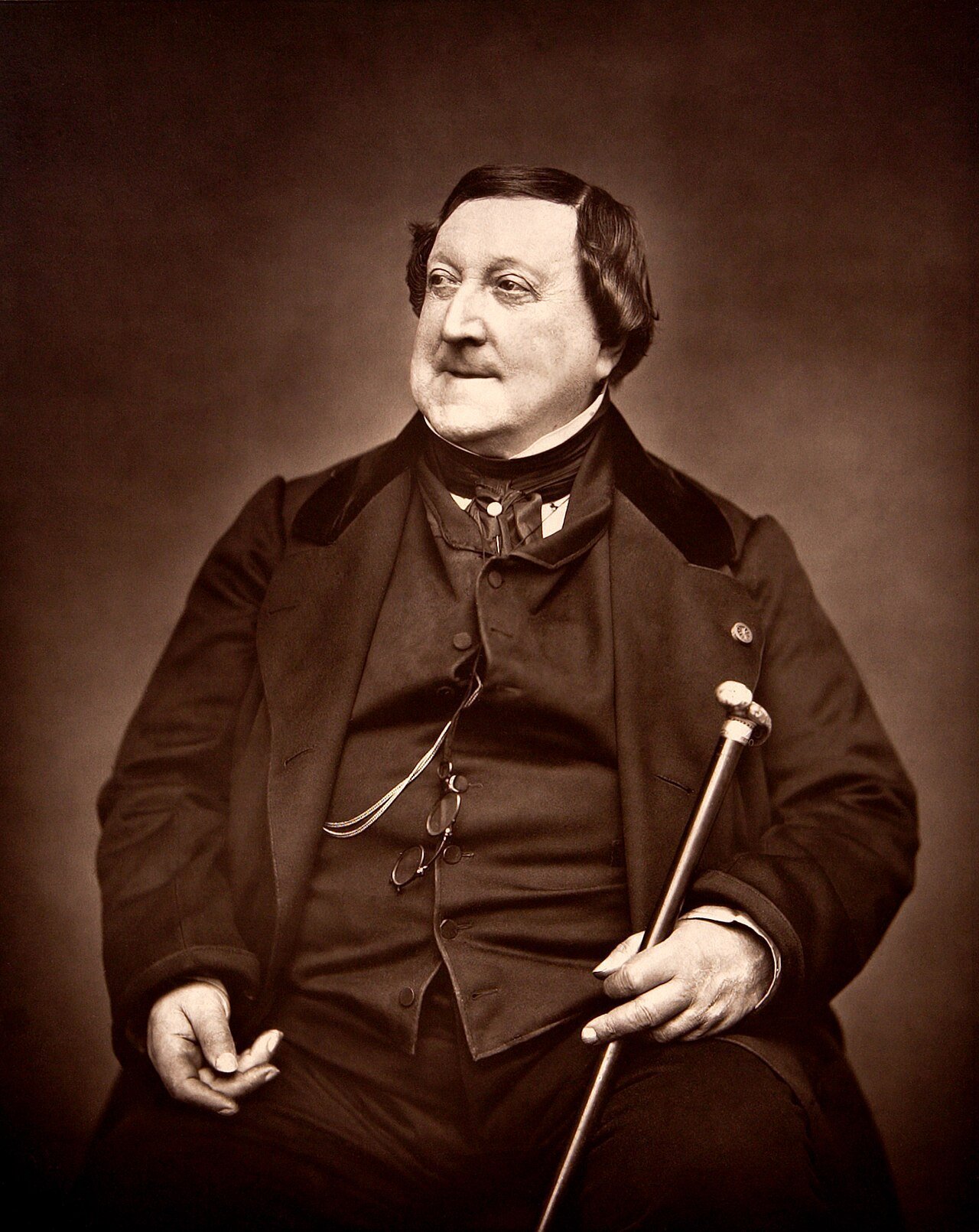
On Friday, November 13, 1868, the composer Gioachino Rossini died at his home near Paris. He was 76, famous across Europe for The Barber of Seville and William Tell, and, according to his first English biographer, deeply superstitious. He believed Fridays were unlucky. He believed the number thirteen was unlucky. And he died on a Friday the 13th.
That biography, published in 1869, is the earliest known English-language text to link the two. This Friday, November 13, 2026, is the third Friday the 13th of the year, which makes it a good moment to ask a simple question: why do so many people think this date is cursed? The answer turns out to be younger, stranger and more interesting than most of the stories you will read online.
The short answer
Friday the 13th is two older superstitions glued together. People in Europe were wary of the number 13 for centuries, and Friday had a bad reputation since at least the Middle Ages. But there is no record of anyone treating Friday the 13th as especially unlucky until the 19th century. The idea spread through books, newspapers and finally horror films, and it is now one of the best-known superstitions in the Western world.
Why 13 is "unlucky"
Thirteen has an awkward place in a world that loves twelve: twelve months, twelve hours on a clock face, twelve signs of the zodiac, twelve apostles. Thirteen is one too many, and two old stories made that extra one sinister.
- The Last Supper. In the Christian story, thirteen people sat down to Jesus's final meal: Jesus and his twelve apostles, including Judas, who betrayed him. For centuries, having thirteen people at a dinner table was thought to bring bad luck, sometimes death, to one of the guests.
- Loki at the feast. In a Norse myth, twelve gods were dining in Valhalla when the trickster Loki turned up uninvited as the thirteenth guest. He arranged the death of Balder, the most beloved of the gods, and the world was plunged into darkness.
The fear of the number has its own name, triskaidekaphobia, and its effects are easy to spot. Many tall buildings, especially in the United States, have no floor numbered 13, and some hotels and airlines leave out room or row 13 altogether.
Why Friday is "unlucky"
Friday's bad name is older than you might expect. In the 14th century, Geoffrey Chaucer's Canterbury Tales already treated Friday as a day when things went wrong, and for centuries afterwards people avoided starting journeys or new projects on a Friday. In Christian tradition it was also the day of the Crucifixion. Sailors in particular were famous for refusing to set sail on a Friday.
When the two came together
For most of history, then, you had an unlucky number and an unlucky day, but nobody seems to have made much of the combination. That changed in the 1800s.
- 1834: in a French play, Les Finesses des Gribouilles, a character blames his misfortunes on having been born on Friday, December 13, 1813.
- 1869: H. Sutherland Edwards's The Life of Rossini describes the composer's dread of Fridays and of the number thirteen, and calls his death on Friday, November 13, "remarkable". This is the earliest known English reference.
- 1907: the American businessman Thomas W. Lawson publishes a novel called Friday, the Thirteenth, in which a stockbroker exploits the superstition to cause a panic on Wall Street. It probably did a lot to make the phrase familiar.
What about the Knights Templar?
You will often read that Friday the 13th is unlucky because of the Knights Templar. On Friday, October 13, 1307, agents of King Philip IV of France arrested hundreds of members of the wealthy military order on charges of heresy. Many were tortured, and dozens were later burned at the stake.
It is a dramatic story, and the arrests really did happen on that date. But there is no evidence that anyone linked the Templars to an unlucky Friday the 13th in the centuries that followed. Since there is no record of the date being considered unlucky at all before the 1800s, more than five hundred years later, the Templar explanation is almost certainly a modern add-on, made popular by novels and documentaries rather than by history.
Then came Jason
If the 19th century gave us the superstition, the 20th century made it famous. In 1980, a low-budget slasher film called Friday the 13th became a surprise hit. It spawned one of the longest-running franchises in horror, and its hockey-masked killer, Jason Voorhees, turned the date into a pop-culture event. (Fans like to point out that Jason is not even the killer in the first film. That was his mother.)
Today the date comes with horror marathons, cinema re-releases and even special offers at tattoo shops, where some customers get a "13" inked to turn the bad luck around.
Is Friday the 13th actually unlucky?
People have tried to test it.
- The 1993 British study. Doctors writing in the British Medical Journal compared traffic, shopping and hospital admissions in the South West Thames region on Friday the 13ths and on ordinary Fridays. Fewer cars used the southern M25 on the 13th, but there were more admissions after transport accidents: 65 against 45. They concluded that the risk of being admitted to hospital after a transport accident "may be increased by as much as 52 percent", and tongue in cheek, recommended staying at home. The numbers were small, and the paper appeared in the journal's light-hearted Christmas issue.
- The Dutch insurance figures. In 2008, the Dutch Centre for Insurance Statistics reported that Friday the 13ths actually had fewer accidents, fires and thefts than other Fridays: about 7,500 traffic accident reports, against 7,800 on an average Friday. Their explanation was that superstitious people are more careful, or simply stay at home.
- The cost of fear. In 2004, National Geographic reported an estimate that US$800 to 900 million in business is lost on each Friday the 13th because people avoid travelling, shopping or signing deals. The same reporting suggested that 17 to 21 million Americans are affected by fear of the day, sometimes called paraskavedekatriaphobia. Airlines contacted at the time said they saw no noticeable drop in passengers.
Finland has found a practical use for the date: since 1995 it has held a National Accident Day, focused on safety awareness, on a Friday the 13th.
Of course, real tragedies have fallen on the date, which keeps the legend alive. Australia's "Black Friday" bushfires in Victoria peaked on Friday, January 13, 1939, and the Uruguayan Air Force flight that crashed in the Andes, whose survivors spent 72 days in the mountains, went down on Friday, October 13, 1972. But disasters happen on every day of the week. We just remember the ones that fit the story.
Not everyone fears Friday
The unlucky date depends on where you live:
- Spain and Latin America: the day to worry about is martes trece, Tuesday the 13th.
- Greece: Tuesday is the unlucky day, especially Tuesday the 13th. It is often linked to the fall of Constantinople, which was sacked by crusaders on Tuesday, April 13, 1204, and fell to the Ottomans on Tuesday, May 29, 1453.
- Italy: the unlucky date is Friday the 17th. Written in Roman numerals, 17 is XVII, and its letters can be rearranged into VIXI, Latin for "I have lived", in other words, "I am dead". In Italy, 13 is often considered lucky.

How often does Friday the 13th happen?
Every year has at least one Friday the 13th and at most three. Any month that starts on a Sunday has one. 2026 is one of the years with the maximum: February 13, March 13 and November 13. That pattern happens in any ordinary year that begins on a Thursday, and it will not come round again until 2037. After November 13, 2026, the next Friday the 13th is August 13, 2027.
November 13 is also the anniversary of a real American horror story: in the early hours of November 13, 1974, Ronald DeFeo Jr. murdered six members of his family at 112 Ocean Avenue, the crime behind The Amityville Horror.
Our take
Friday the 13th is a lovely example of how superstitions are made. Two old fears, an unlucky number and an unlucky day, sat side by side for centuries. Then a superstitious composer happened to die on the "right" date, a biographer wrote it down, a novelist built a plot around it, and Hollywood did the rest. There is no curse in the calendar. But if you want to spend Friday night with the lights low and a horror film on, it is the perfect excuse. And if you would rather go looking for something genuinely eerie, our map of haunted places near you is a good place to start.
Frequently asked questions
Why is Friday the 13th considered unlucky?
It combines two older superstitions: the number 13, linked to the thirteen at the Last Supper and to a Norse myth about Loki, and Friday, considered unlucky since at least the 14th century. The two were only linked together in the 19th century.
Does Friday the 13th come from the Knights Templar?
Probably not. The Templars were arrested on Friday, October 13, 1307, but there is no record of the date being seen as unlucky until the 1800s. The Templar link is a modern explanation.
What is the fear of Friday the 13th called?
It is sometimes called paraskavedekatriaphobia. The fear of the number 13 on its own is triskaidekaphobia.
How many Friday the 13ths are there in 2026?
Three: February 13, March 13 and November 13. The next one after that is August 13, 2027.
Is Friday the 13th unlucky everywhere?
No. In Spain, Latin America and Greece the unlucky day is Tuesday the 13th, and in Italy it is Friday the 17th.
Are there more accidents on Friday the 13th?
Not according to the evidence. A small 1993 British study suggested a rise in accident admissions, but larger Dutch insurance figures from 2008 found slightly fewer accidents than on other Fridays.


Leave a Reply
Your email address will not be published. Comments are moderated before they appear.