

In the first days of November 1541, Hampton Court Palace held two people whose marriage was about to end in blood. One was Henry VIII, fifty years old, heavy, ill and recently convinced he had at last found a wife who made him happy. The other was his fifth queen, Catherine Howard, still a teenager.
Within a week Henry had left the palace and would never see her again. Within four months she was dead. And somewhere in between, according to a story told for centuries, she broke free from her guards and ran screaming down a long gallery towards the chapel where the King was at prayer, begging for mercy, before being dragged back to her rooms.
That corridor is now called the Haunted Gallery, and visitors still say they can feel her there. This is the true history of what happened at Hampton Court in 1541, how much of the famous scene can actually be proved, and the palace's other ghosts, including one caught on CCTV in 2003.
Quick facts
- Where: Hampton Court Palace, Richmond upon Thames, south-west London
- Who: Catherine Howard, fifth wife of Henry VIII, born about 1523
- When it began: November 1, 1541, when Henry was given written allegations against her
- What happened to her: executed at the Tower of London on February 13, 1542, aged about 18 or 19
- The legend: she escaped her guards and ran down the gallery screaming for the King; her ghost is said to repeat the run
- Is the run documented? No contemporary record of it has been found
The teenage queen
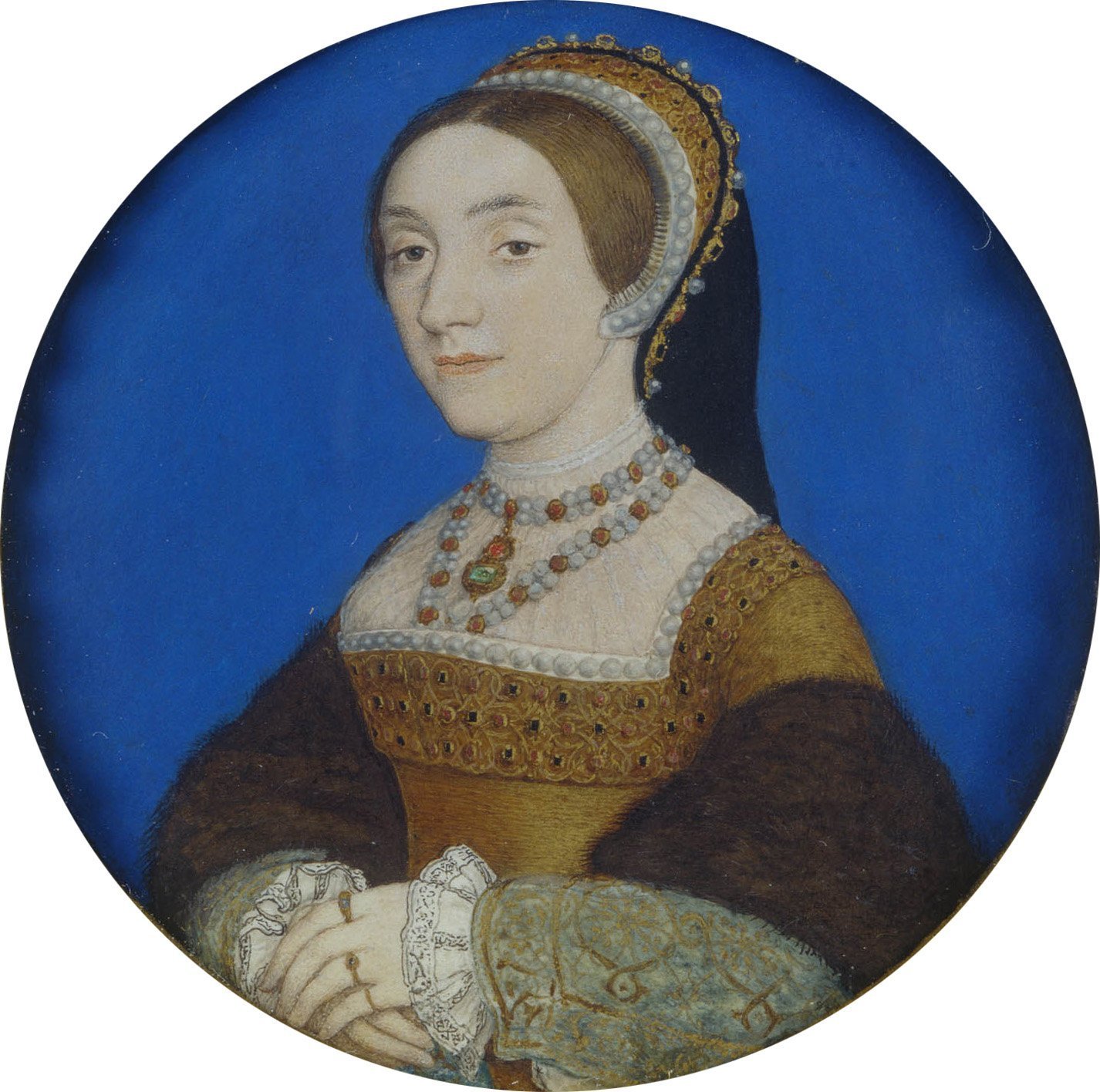
Catherine Howard was born around 1523, probably in Lambeth, into one of the most powerful families in England. Her uncle was the Duke of Norfolk, and her cousin was Anne Boleyn, Henry's second wife, who had been beheaded in 1536.
She came to court as a maid of honour to Henry's fourth wife, Anne of Cleves, a marriage the King disliked from the start. Henry noticed the lively young maid, and on July 28, 1540, at Oatlands Palace in Surrey, he married her. She was about seventeen. He was forty-nine.
For a year, things seemed to go well. But Catherine had a past that the King knew nothing about: relationships, before her marriage, with her music teacher Henry Manox and with a young man named Francis Dereham, while she was growing up in the household of her step-grandmother, the Dowager Duchess of Norfolk. And as queen she had begun meeting secretly with Thomas Culpeper, one of the King's own favourite courtiers.
November 1541: the week everything fell apart
On November 1, 1541, All Saints' Day, Henry was handed a letter while he was at prayer in the Chapel Royal. It came from Thomas Cranmer, the Archbishop of Canterbury, and it set out what informants had revealed about the Queen's life before her marriage.
Henry at first refused to believe it and ordered an investigation, expecting it to clear her name. It did the opposite. On November 6 the King left Hampton Court. He never saw Catherine again.
From November 7, Cranmer and members of the King's council questioned her. More came out, including her meetings with Culpeper, arranged with the help of one of her ladies, Jane Boleyn, Lady Rochford. By November 23 she had been stripped of her title as queen and sent to be held at Syon Abbey, a former convent beside the Thames.
The end
The men paid first. Culpeper and Dereham were tried for treason and, on December 10, 1541, executed at Tyburn: Culpeper was beheaded, while Dereham was hanged, drawn and quartered.
Catherine never had a trial. Instead Parliament passed an Act of Attainder against her, a law that simply declared her guilty. On February 10, 1542, she was taken by barge along the Thames to the Tower of London. On the morning of Monday, February 13, she was beheaded with an axe inside the Tower walls. Lady Rochford was executed straight after her.
Catherine was eighteen or nineteen years old. She was buried in an unmarked grave in the Chapel of St Peter ad Vincula, inside the Tower, the same chapel where her cousin Anne Boleyn had been buried six years earlier.
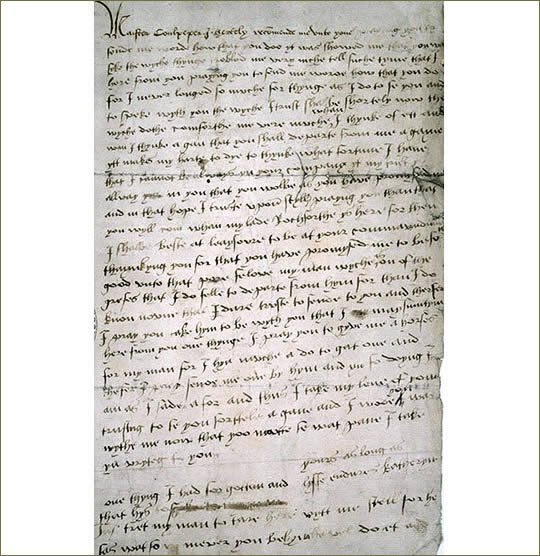
One small, very human piece of evidence from the case survives. The National Archives in London holds a letter from Catherine to Thomas Culpeper, written in 1541 and later used against her. It is the only surviving example of her handwriting, and it ends: "Yours as long as life endures, Katheryn."
The legend of the Haunted Gallery
Hampton Court's version of the story goes like this. When Catherine realised she was under arrest, she slipped away from the guards at her door and ran along the long gallery that leads towards the Chapel Royal, where she knew Henry was hearing mass. She screamed his name and begged him to listen to her. The doors stayed shut. The guards caught her and dragged her back, still screaming.
Ever since, people have claimed to see a young woman in white running along that gallery, or to hear screams, or simply to feel a sudden cold or a wave of dread at one particular spot. Historic Royal Palaces, the charity that runs the palace, tells the story itself, and the corridor was already known as "the Haunted Gallery" before it was opened to the public in 1918.
So did it happen?
Probably not, at least not the way it is usually told. Historians who have gone looking have not found the dramatic run in any source from 1541, even though the scandal was written about at the time by the King's council and by the foreign ambassadors at court. The scene seems to appear only in much later retellings.
That does not make it impossible. Catherine was a terrified teenager who knew exactly what had happened to her cousin Anne, and she had every reason to try to reach the King. But the story of the screaming queen in the gallery is best understood as a legend that grew up around a real tragedy, not as a documented event.
The palace's other ghosts
Catherine is not the only ghost Hampton Court is said to have. Like her story, these are legends, and they are best read that way.
Jane Seymour
Henry's third wife gave birth to his longed-for son, the future Edward VI, at Hampton Court on October 12, 1537, and died there twelve days later. Her ghost is said to walk through Clock Court and the nearby stairs carrying a lighted candle, particularly around the anniversary of her son's birth.
The Grey Lady
Sybil Penn was a servant to four Tudor monarchs and nurse to the young Edward VI. She died in 1562 and was buried at St Mary's Church in Hampton. In 1829 her tomb was disturbed when the church was renovated, and soon afterwards stories spread of a "grey lady" in the palace and of the sound of a spinning wheel coming through a wall. Some accounts say a forgotten room was then found with an old spinning wheel inside. There is no proof the wheel had anything to do with her.
"Skeletor" on CCTV
The most modern ghost story at Hampton Court comes with video. In October 2003, palace staff noticed that a set of heavy fire doors near Clock Court kept bursting open, on three separate occasions. When they checked the security footage, one recording appeared to show a figure in a long, dark robe step out of the doorway and pull the doors shut. Staff could not identify the person. The footage was released that December, made news around the world, and the figure was quickly nicknamed "Skeletor" because of its pale, gaunt face. Sceptics have suggested a costumed member of staff or a visitor; nobody has ever proved who, or what, it was.
Our take
The Haunted Gallery is a perfect example of how the best ghost stories work. The history underneath it is real and genuinely dark: a young woman, used by her ambitious family, married to a dangerous king and destroyed within eighteen months. The legend adds the one scene that history did not record, a final desperate run for mercy, and gives the palace a place where you can stand and imagine it. Whether or not anyone has really seen her, it is hard to walk that gallery and not think of her.
Visiting Hampton Court Palace
Hampton Court Palace is in Richmond upon Thames, in south-west London, and is run by Historic Royal Palaces. The Haunted Gallery is part of the visitor route through Henry VIII's apartments, so you can walk it yourself. Check opening times and tickets on the Historic Royal Palaces website before you go.
Hampton Court is also on our map of haunted places near you, and it features in our guide to the most haunted places in the UK.
Frequently asked questions
Is Hampton Court Palace haunted?
It is one of England's most famous "haunted" buildings. Its best-known ghost stories involve Catherine Howard, Jane Seymour and Sybil Penn, the "Grey Lady", plus a robed figure caught on CCTV in 2003. None has been proved.
Who haunts the Haunted Gallery at Hampton Court?
Legend says it is Catherine Howard, Henry VIII's fifth wife, who supposedly ran screaming down the gallery to beg the King for mercy after her arrest in 1541.
Did Catherine Howard really run down the gallery?
There is no record of it from 1541. Historians generally treat it as a later legend, although her arrest at Hampton Court in November 1541 is well documented.
Why was Catherine Howard executed?
She was accused of having relationships before her marriage that she had hidden from Henry, and of secretly meeting Thomas Culpeper while she was queen. She was condemned by an Act of Attainder without a trial and beheaded on February 13, 1542.
How old was Catherine Howard when she died?
About eighteen or nineteen. Her exact date of birth is not known.
Can you visit the Haunted Gallery?
Yes. It is part of the visitor route through Henry VIII's apartments at Hampton Court Palace.


Leave a Reply
Your email address will not be published. Comments are moderated before they appear.