

At about one o'clock on the afternoon of December 4, 1872, the crew of the Canadian brigantine Dei Gratia spotted another ship on the Atlantic, midway between the Azores and the coast of Portugal. Something about her looked wrong. She was moving erratically, her sails were in disorder, and nobody answered their signals.
When two men rowed across and climbed aboard, they found the Mary Celeste completely deserted. Her cargo was intact. There was plenty of food and water. The crew's belongings were still in their quarters. But the captain, his wife, their two-year-old daughter and seven sailors had vanished, along with the ship's only lifeboat.
None of them was ever seen again. More than 150 years later, the Mary Celeste is still the most famous "ghost ship" in the world. Here is what the boarding party actually found, what was made up later, and the theories about what really happened.
Quick facts
- Ship: the Mary Celeste, an American merchant brigantine built in Nova Scotia in 1861
- Sailed: from New York in early November 1872, bound for Genoa, Italy
- Cargo: 1,701 barrels of alcohol
- Aboard: Captain Benjamin Briggs, his wife Sarah, their daughter Sophia and seven crew
- Found: deserted on December 4, 1872, between the Azores and Portugal, by the Dei Gratia
- What was missing: all ten people, the lifeboat, most of the ship's papers and the navigation instruments
- What happened: nobody knows
A ship with a past
The ship began life in 1861 as the Amazon, built at Spencer's Island in Nova Scotia. After several owners and an accident or two, she was rebuilt, registered in New York in 1868 and renamed Mary Celeste.
Her captain in 1872 was Benjamin Spooner Briggs, an experienced and well-respected master from a Massachusetts seafaring family, who also owned a share of the ship. He brought his wife, Sarah, and their daughter, Sophia, who had been born in October 1870. Their son Arthur, then seven, stayed behind with his grandmother in Marion, Massachusetts, so that he could go to school. He would be the only member of the family left. The crew were seven men: first mate Albert Richardson, second mate Andrew Gilling, the steward and cook Edward Head, and four seamen.
On November 5, 1872, the Mary Celeste left Pier 50 on the East River in New York, carrying 1,701 barrels of alcohol bound for Genoa. Bad weather kept her anchored off Staten Island for two days before she headed out into the Atlantic.
December 4, 1872: the empty ship
The Dei Gratia, under Captain David Morehouse, had left New York about a week after the Mary Celeste. When they sighted her a month later, roughly at 38°20′N 17°15′W, Morehouse sent his first mate, Oliver Deveau, and second mate John Wright across in a boat.
What they found has been retold, and exaggerated, ever since. The real details, from their testimony, are strange enough:
- The ship was afloat and basically sound, but had about three and a half feet of water in her hold. That was a lot, but not enough to sink her.
- Some sails were set, others were damaged or missing, and some of the rigging was broken.
- Two hatches were open, but the cargo of alcohol was intact.
- The ship's only lifeboat, a small yawl, was gone. There was nothing to show it had been carried away by the sea, so it seemed the crew had launched it themselves.
- A makeshift sounding rod, used to measure the water in the hold, was lying on deck.
- There was plenty of food and fresh water. The crew's clothes and belongings were still aboard, along with the captain's sword under his bed.
- Most of the ship's papers and the captain's navigation instruments were missing.
The last entry in the log was dated November 25, at 8 a.m., and recorded the ship's position off Santa Maria Island in the Azores. That was nearly 400 nautical miles from where she was found. For about ten days, the Mary Celeste had been sailing herself across the Atlantic.
One thing the boarding party did not find, despite what many retellings claim, was a table set with half-eaten meals and still-warm cups of tea. That detail came later, from fiction.
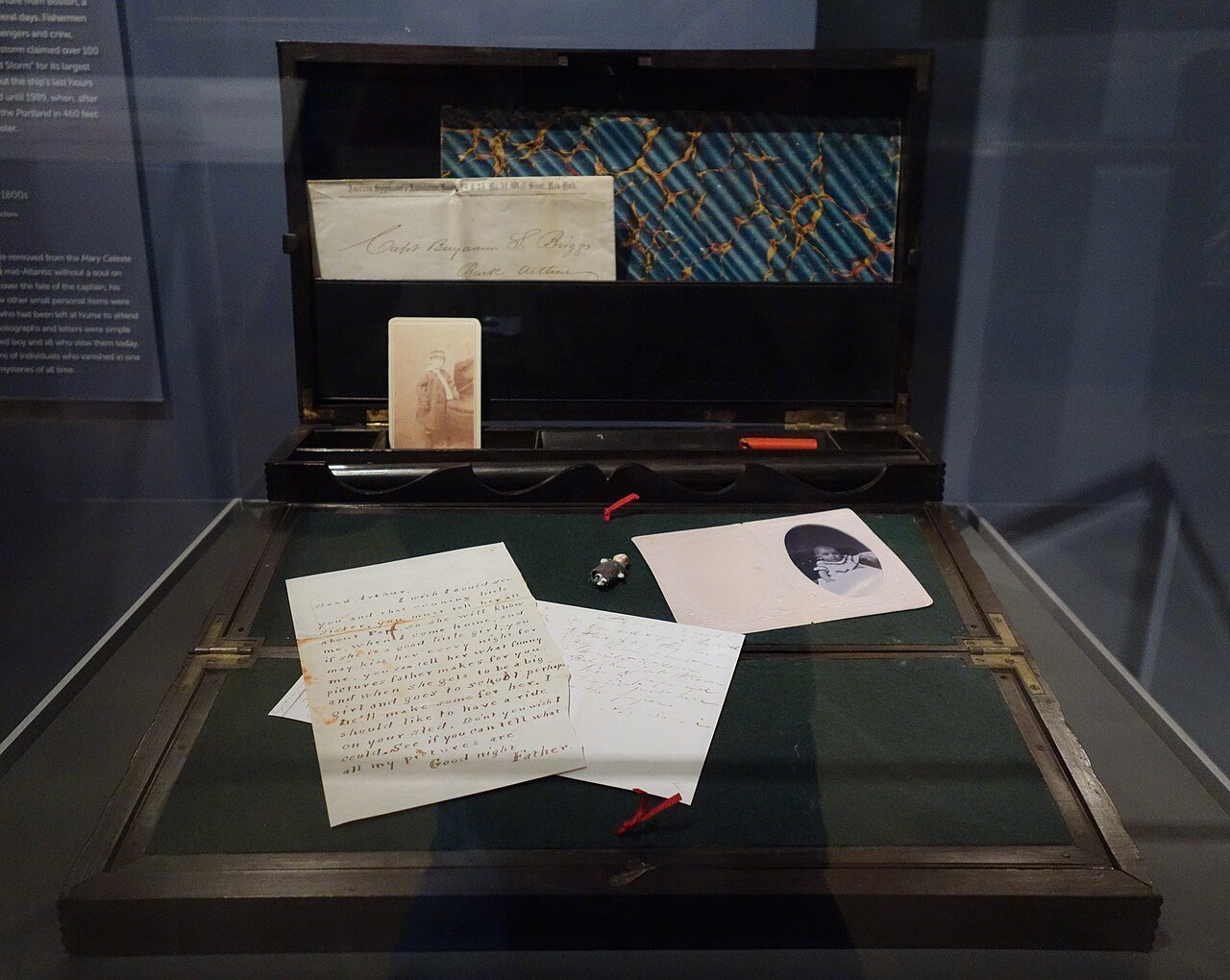
The Gibraltar inquiry
Deveau and two other men sailed the Mary Celeste to Gibraltar, where the Dei Gratia's crew claimed salvage money for bringing her in. The hearing, which began on December 17, 1872, quickly turned into an investigation.
Gibraltar's attorney general, Frederick Solly-Flood, was convinced there had been foul play. He suspected that the crew had got drunk on the cargo, murdered the captain and his family, and escaped, or that the two crews had plotted the whole thing together to claim the salvage. He pointed to marks on the ship's bow and stains on a sword as evidence of violence.
The evidence did not support him. Scientific tests found the stains were not blood. A US Navy captain who examined the bow marks judged them to be natural damage. The alcohol barrels were found to be undrinkable industrial alcohol. In the end, the court awarded the Dei Gratia's crew £1,700, about a fifth of the value of the ship and cargo, a smaller sum than they had hoped for, which some took as a sign that the court still had its doubts.
How Arthur Conan Doyle made it a legend
For a decade the case was a curiosity. Then, in January 1884, a young doctor named Arthur Conan Doyle, three years before he invented Sherlock Holmes, published a short story in The Cornhill Magazine called "J. Habakuk Jephson's Statement". It was a fictional "survivor's account" of a ship he called the Marie Celeste.
Doyle invented much of the detail that people still repeat, including the misspelled name and the cosy picture of an abandoned ship with everything left exactly in place. The story was published anonymously and some readers took it as true. To this day, the ship is often called the "Marie Celeste".
What really happened? The theories
With no survivors and no message, every explanation is guesswork. These are the main ones:
A scare from the cargo
Alcohol fumes can build up in a closed hold. One long-standing theory is that the captain, fearing an explosion, perhaps after a small blast or a strong smell when the hatches were opened, ordered everyone into the lifeboat to wait at a safe distance, tied to the ship by a line. If the line parted, the little boat would have been left behind in the open Atlantic. In 2006, an experiment by the chemist Andrea Sella at University College London showed that alcohol vapour could ignite in a sudden "pressure wave" flash that left no scorch marks, which would explain why the ship showed no sign of fire. The idea is attractive, but it has never been proved.
A problem with the pumps
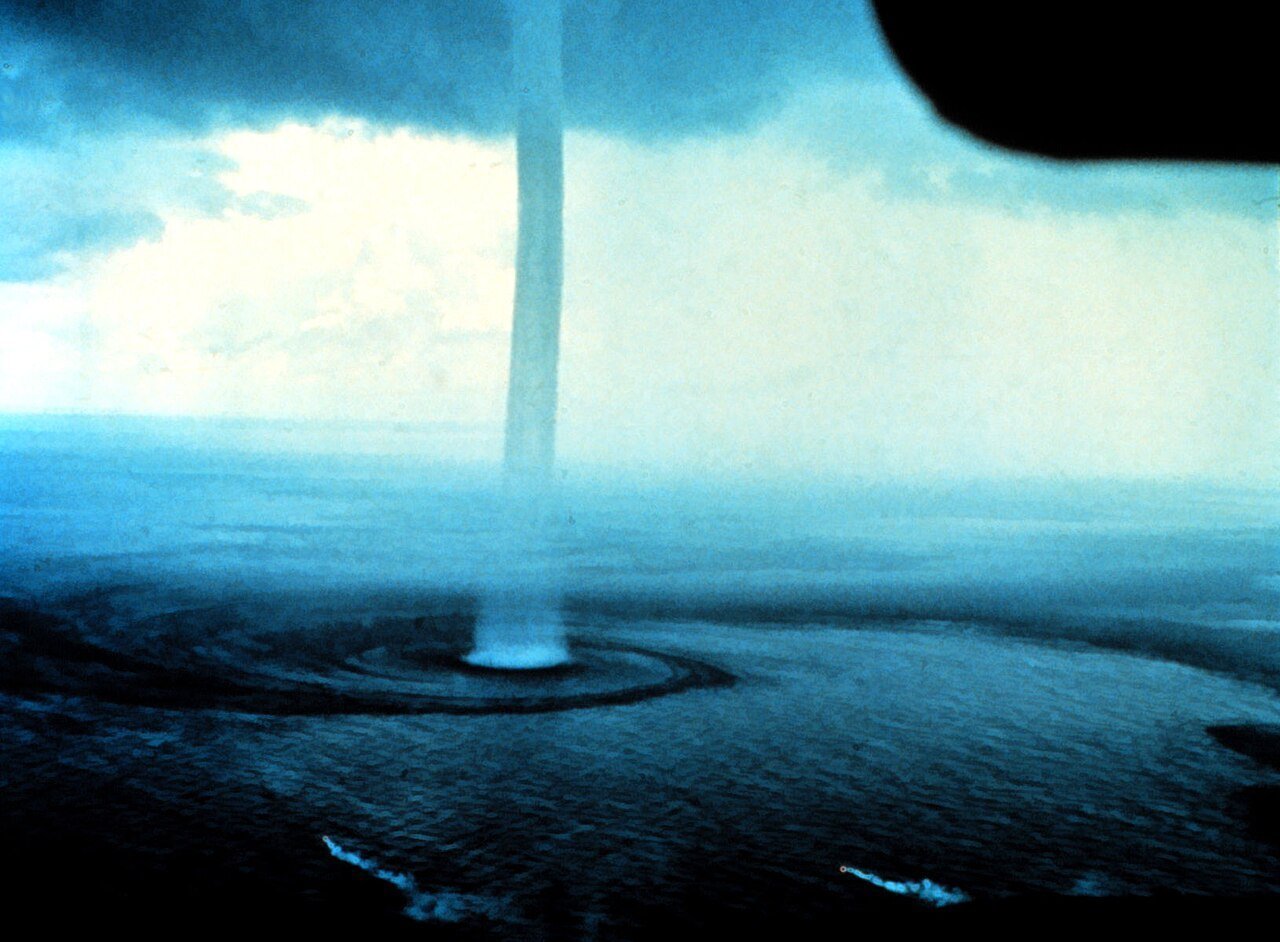
Oliver Deveau himself suggested a simpler explanation. If the crew had measured the water in the hold with that makeshift sounding rod and got a false, frighteningly high reading, perhaps because one of the pumps had failed, Briggs might have believed the ship was sinking fast and abandoned her. A waterspout, a tornado over the sea, has also been suggested as something that could have dumped water into the ship and left the crew thinking she was going down.
The less likely ideas
- Mutiny or murder: Solly-Flood's theory, but there was no sign of a struggle and the evidence of "blood" turned out to be false.
- Pirates: unlikely, because the valuables aboard, including the crew's belongings and the captain's possessions, were left untouched.
- Insurance fraud: some suspected the owners, but no insurer pursued it.
- A giant squid, an undersea earthquake or something supernatural: all have been suggested over the years. None fits the evidence, which suggests the people aboard left in the lifeboat of their own accord.
Most historians agree on one thing: something sudden and frightening must have convinced an experienced captain to put his wife and baby daughter into a small open boat in the middle of the Atlantic, rather than stay aboard a ship that turned out to be perfectly able to stay afloat.
The cursed ship's final voyage
After the inquiry, the Mary Celeste was sold and passed through several more owners. Her end was not mysterious at all. On January 3, 1885, her captain, Gilman Parker, deliberately ran her onto a reef near Haiti's Gonâve Island as part of an insurance fraud. He was tried but not convicted, and his reputation was ruined.
In 2001, an expedition led by the novelist Clive Cussler announced that it had found her wreck on that reef. Tree-ring dating of the timbers later showed they came from trees that were still growing in 1894, nearly ten years after she sank, so the wreck could not have been the Mary Celeste.
Our take
The Mary Celeste is a perfect example of how a real mystery turns into a legend. The facts, a sound ship, a missing lifeboat, a family gone, are eerie enough. Then a young writer added the warm teacups and a better name, and the story has been sailing on ever since. Our best guess is the most human one: a worried captain, a false alarm about water or fumes, a decision to abandon ship for what he thought would be a short time, and a lifeboat that drifted away from safety. But in the end, only the ten people who climbed into that boat know what frightened them.
For more ships with terrible stories, read about the SS Ourang Medan, the whaleship Essex and the wreck of the Edmund Fitzgerald, or explore our map of haunted places.
Frequently asked questions
What happened to the Mary Celeste?
She was found drifting and deserted between the Azores and Portugal on December 4, 1872. Her lifeboat was missing and all ten people aboard had disappeared. What made them leave has never been established.
Were there any survivors from the Mary Celeste?
No. Captain Briggs, his wife, their daughter and the seven crew were never found.
Was there food on the table when the Mary Celeste was found?
No. That detail comes from Arthur Conan Doyle's 1884 short story, not from the testimony of the men who boarded her.
Why is it sometimes called the Marie Celeste?
Because Arthur Conan Doyle used that name in his fictional story "J. Habakuk Jephson's Statement", which made the mystery famous.
Where is the Mary Celeste now?
She was deliberately wrecked on a reef near Haiti in 1885 in an insurance fraud. A wreck found there in 2001 turned out, after tree-ring dating, not to be her.
What is the most likely explanation?
Most researchers think the crew abandoned ship in a hurry because they believed she was in danger, perhaps from a false reading of water in the hold or fear of the alcohol cargo exploding, and that their lifeboat was then lost.


Leave a Reply
Your email address will not be published. Comments are moderated before they appear.