

On the afternoon before Thanksgiving in 1971, a quiet man in a dark suit walked up to the Northwest Orient counter at Portland International Airport and paid cash for a one-way ticket to Seattle. He gave his name as Dan Cooper. The ticket cost twenty dollars.
A few hours later he had $200,000 in twenty-dollar bills strapped to his body, and he was standing at the open rear door of a Boeing 727 as it flew through rain and darkness over south-western Washington. Then he stepped out into the night, and nobody ever saw him again.
More than half a century later, it is still the only documented unsolved case of air piracy in the history of commercial aviation, and D.B. Cooper is one of the most famous disappearances anywhere. This is what happened on November 24, 1971, what the evidence shows, and why the case has never been closed.
Quick facts
- Date: Wednesday, November 24, 1971, the day before Thanksgiving
- Flight: Northwest Orient Airlines Flight 305, a Boeing 727, Portland to Seattle
- The hijacker: bought his ticket as "Dan Cooper"; his real identity is unknown
- Ransom: $200,000 in $20 bills and four parachutes
- Escape: parachuted from the rear airstair at night, somewhere over south-western Washington
- Found since: $5,800 of the ransom, on a Columbia River beach in 1980
- Status: the FBI suspended its active investigation in 2016; the case is unsolved
"Miss, I have a bomb"
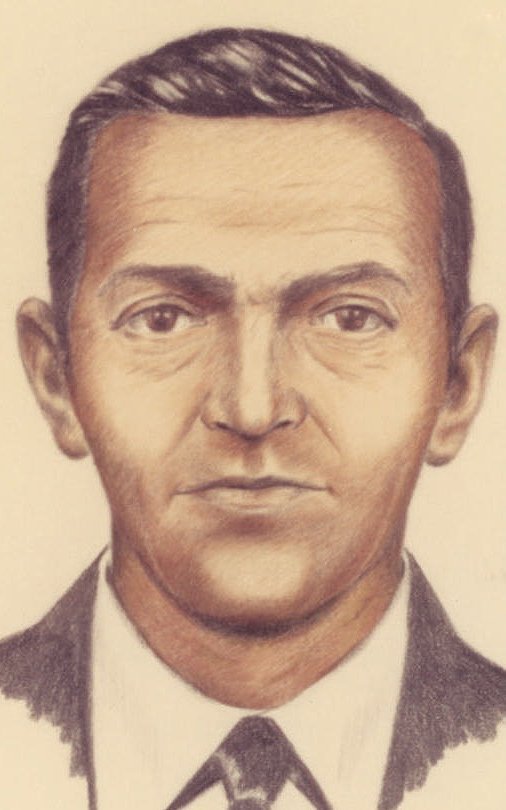
Flight 305 left Portland on schedule at 2:50 p.m. for the short hop to Seattle. The man in the last row looked like any other business traveller: witnesses described a white man in his mid-forties, with dark hair and brown eyes, wearing a dark suit, a white shirt, a thin black clip-on tie and a black raincoat. He ordered a bourbon and 7-Up.
Soon after take-off he handed a note to the flight attendant, Florence Schaffner. Assuming it was a lonely businessman's phone number, she dropped it unopened into her purse. He leaned over and whispered: "Miss, you'd better look at that note. I have a bomb."
The note, written in capital letters, said he had a bomb in his briefcase and wanted her to sit with him. When she did, he opened the case just long enough for her to see two rows of four red cylinders, wired to a large battery. She assumed it was dynamite. Then he dictated his demands: $200,000 in "negotiable American currency", four parachutes, and a fuel truck waiting in Seattle when they landed.
By every account he was calm and polite. He also seemed to know the area and the aircraft. As the plane circled, he looked out and remarked, "Looks like Tacoma down there," and he knew that McChord Air Force Base was only a twenty-minute drive from the Seattle airport. The FBI later said he showed "a specific knowledge of flying and aircraft in general".
The exchange in Seattle
While the plane circled, the airline and the FBI gathered the money: 10,000 twenty-dollar bills from a Seattle bank. The FBI photographed every one on microfilm, so the serial numbers could be traced. Four parachutes were found at short notice. At Seattle-Tacoma airport, the money and the parachutes were brought to the plane. Cooper let all the passengers go, along with two of the flight attendants.
Four crew stayed with him: Captain William Scott, the first officer, the flight engineer, and a young flight attendant named Tina Mucklow, who became his main contact. He gave precise orders. The 727 was to fly south-east towards Mexico City, stopping to refuel in Reno, Nevada. It was to fly at no more than 10,000 feet, as slowly as it could without stalling, with the landing gear down, the wing flaps set at 15 degrees and the cabin unpressurised. And he wanted the rear airstair, a set of steps that folded down from the tail of the 727, lowered in flight.
8:13 p.m.
The jet took off from Seattle at about 7:40 p.m. Cooper sent Mucklow to the cockpit and stayed alone in the rear cabin. A little after 8 p.m., a warning light told the crew that the airstair had been lowered.
At about 8:13 p.m., the tail of the plane suddenly pitched upwards, and the crew felt their ears pop from a change in pressure. Most investigators believe that was the moment Cooper jumped, though nobody saw it. The night was cloudy and moonless, it was raining, and the plane was somewhere over the forests and rivers north of Portland.
When the 727 landed in Reno at 11:02 p.m., with the airstair still hanging down, officers searched it. Cooper was gone, and so was the money. He had left behind two of the four parachutes, his tie and tie clip, and eight cigarette butts. One of the chutes he took turned out to be a dummy reserve used for training that could not have opened.
How "Dan" became "D.B."
The hijacker called himself Dan Cooper. The famous initials came from a mistake. In the rush of the first night's reporting, a journalist named James Long wrote down the name as "D. B. Cooper", the news agency UPI repeated it, and it stuck. Nobody with those initials was ever involved.
The search
The FBI threw everything at the case. An SR-71 spy plane flew over the likely route to try to photograph the jump zone, but the weather was too poor. Soldiers and agents walked the woods of Clark and Cowlitz counties in Washington, and the area was searched again for weeks in the spring of 1972. A submarine was even used to search Lake Merwin. They found nothing: no parachute, no body, no money.
Part of the problem was that nobody knew exactly where he had jumped. The FBI's estimate of the landing zone shifted over the years, as investigators re-ran the flight data and found that their first assumptions about the plane's route and speed might have been wrong.
The money on the beach
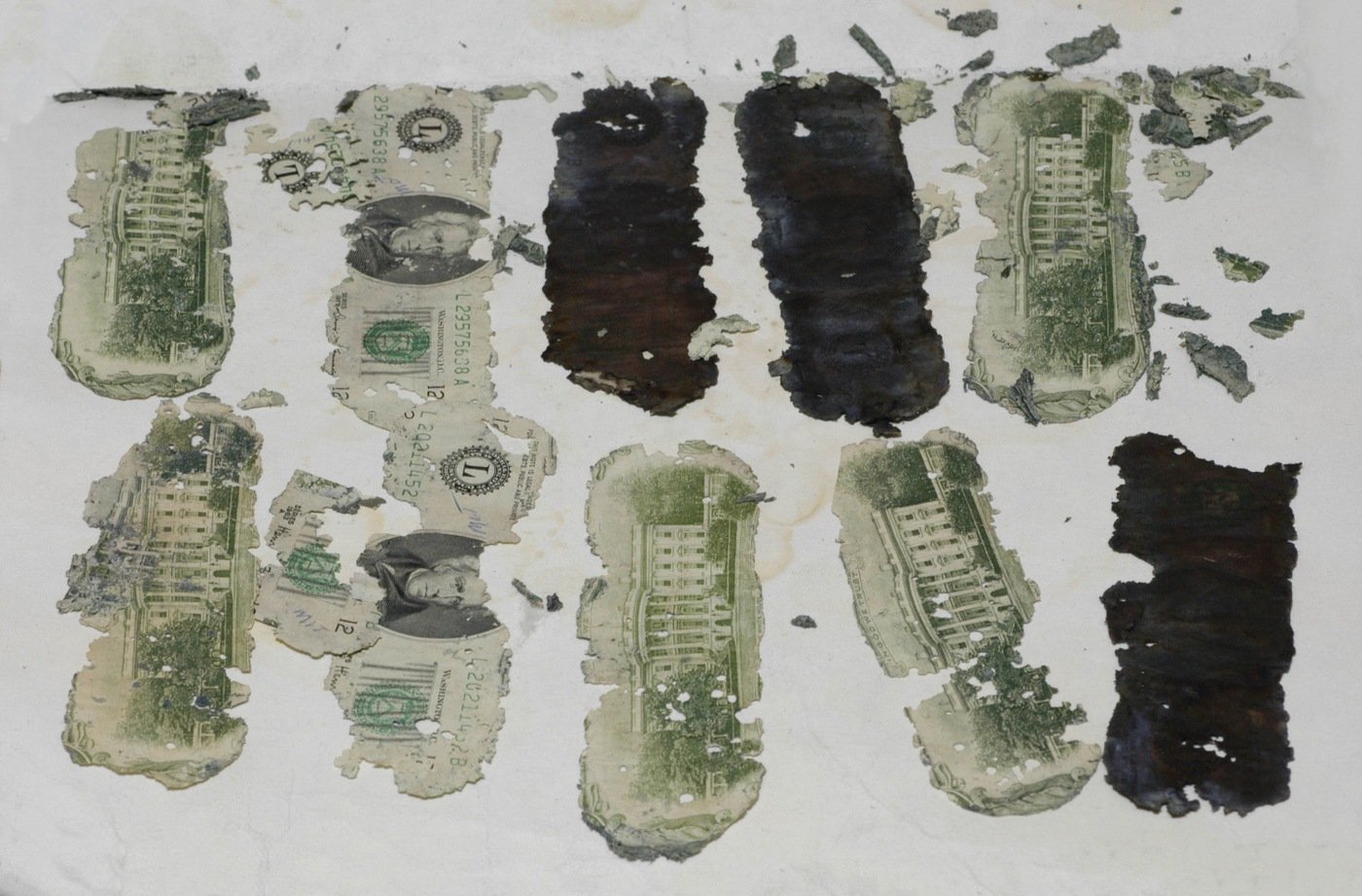
For eight years, nothing turned up. Then, on February 10, 1980, an eight-year-old boy named Brian Ingram was digging out a spot for a campfire on Tena Bar, a sandy beach on the Columbia River about nine miles downstream from Vancouver, Washington. He found three rotting bundles of twenty-dollar bills, still held together by rubber bands: 290 bills, $5,800 in all. The serial numbers matched the ransom.
The find raised more questions than it answered. How did the money get there? Some think Cooper landed in or near the river and the money washed down; others think it was carried there by a tributary, by floods, or even by river dredging. In 1986 a court split the bills between Ingram and the airline's insurer, and the FBI kept fourteen of them as evidence. No other ransom money has ever been found.
The suspects
Between 1971 and 2016 the FBI looked at more than a thousand "serious suspects". None has ever been proved to be Cooper. A few names come up again and again:
- Richard McCoy hijacked United Airlines Flight 855 on April 7, 1972, demanded $500,000 and four parachutes, and jumped. He was arrested two days later with the money. Two years into a 45-year sentence he escaped from prison by crashing a garbage truck through the gates, and three months later he was killed in a shoot-out with FBI agents. The FBI does not consider him a Cooper suspect: he was only 29 and did not match the witnesses' description.
- Kenneth Christiansen trained as an army paratrooper in the 1940s and later worked for Northwest Orient as a flight attendant and purser. His brother became convinced he was Cooper after watching a TV documentary in 2003. The FBI says he is a poor match for the descriptions and that there is no direct evidence against him.
- Robert Rackstraw, a pilot who served with army helicopter units in Vietnam, was the subject of a 2016 History channel documentary. The FBI had already ruled him out in 1979 for lack of any direct evidence.
Cooper's clip-on tie has become the best clue of all. Independent researchers who examined it found microscopic particles of unusual metals, including pure, unalloyed titanium, which in 1971 few people outside specialised industries would ever have handled. That has led some to suggest Cooper worked in electronics or aerospace manufacturing. Later studies have found more metal particles on the tie. None has led to a name.
How Cooper changed flying
Cooper's success inspired a wave of copycats. In 1972 several other hijackers demanded money and parachutes and jumped from airliners, many from the rear stairs of 727s. The industry responded with the changes that shaped modern air travel: airports began screening passengers with metal detectors and inspecting baggage.
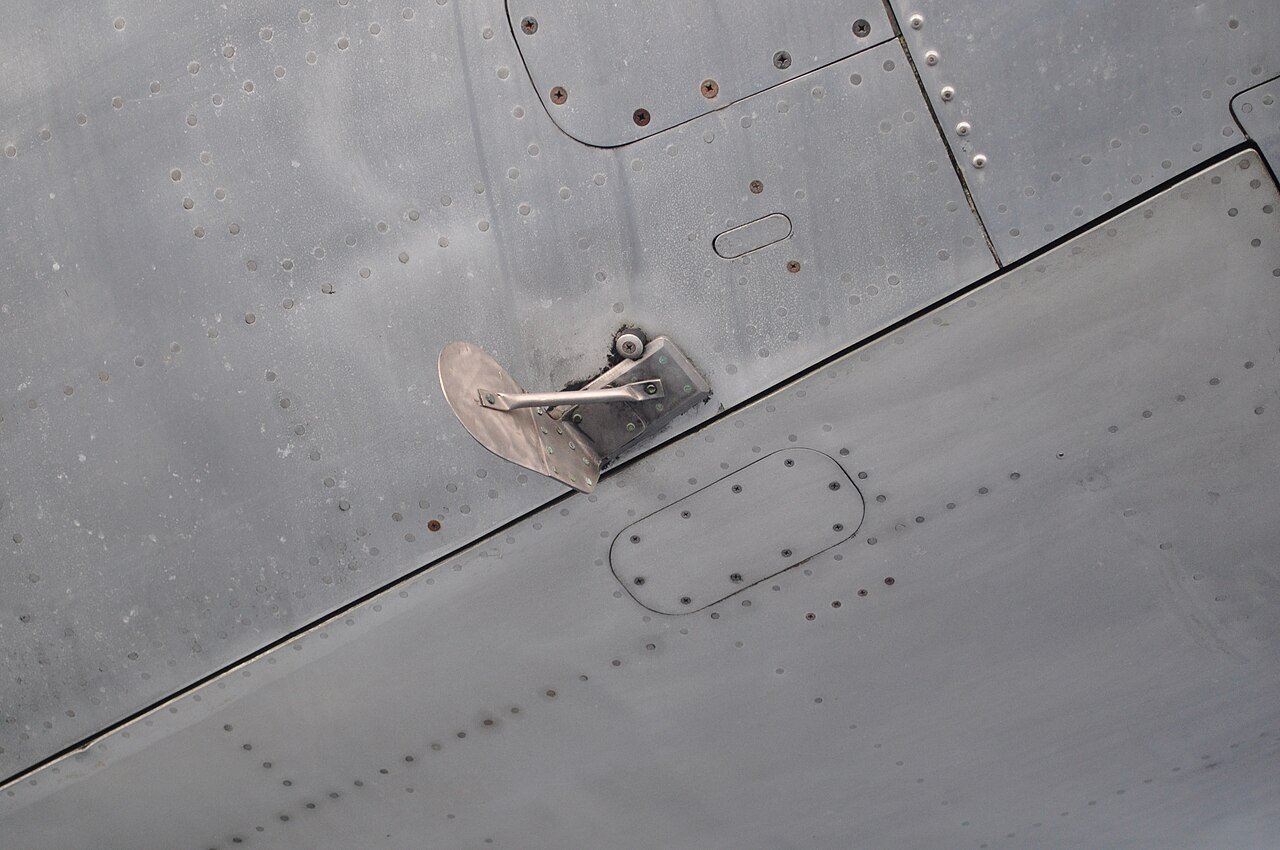
Boeing 727s were also fitted with a simple device, a small hinged flap on the outside of the fuselage, that uses the airflow in flight to stop the rear airstair from being lowered. It is still known as the Cooper vane.
Case closed?
On July 8, 2016, the FBI announced that it was suspending its active investigation and moving its resources to other cases. Its huge case file was made public. Field offices will still accept physical evidence that is specifically linked to the parachutes or the ransom money. The FBI has never said officially whether it thinks Cooper survived.
Our take
Did he survive? The odds were terrible. He jumped at night, in the rain, over forest, with a parachute he could barely steer, and one of his two chutes was useless. As FBI case agent Larry Carr put it, no experienced skydiver would have jumped "wearing loafers and a trench coat". Many former investigators believe he died in the jump and that his remains are still out there somewhere in the trees or the river. But if that is true, it is strange that no parachute, no bones, and only one small bundle of money have ever been found in more than fifty years. That gap is what keeps the legend alive. D.B. Cooper is the man who walked out of the sky and into folklore, and every Thanksgiving Eve, someone, somewhere, wonders whether he got away with it.
If you like real unsolved mysteries from the air, read the strange true story of the Ghost Blimp, the US Navy airship that came home with nobody on board. And for real places with dark histories, try our map of haunted places near you.
Frequently asked questions
Who was D.B. Cooper?
The name given to an unidentified man who hijacked Northwest Orient Flight 305 on November 24, 1971, extorted $200,000 and parachuted from the plane over south-western Washington. His real identity has never been established.
Was D.B. Cooper ever caught?
No. Despite one of the largest investigations in FBI history, he was never identified or found. The FBI suspended its active investigation in July 2016.
Why is he called D.B. Cooper?
He bought his ticket as "Dan Cooper". A reporter mistakenly wrote "D. B. Cooper", a news agency repeated it, and the wrong initials stuck.
Was any of the money ever found?
Yes, a little. In 1980 an eight-year-old boy found $5,800 of the ransom, 290 twenty-dollar bills, buried on Tena Bar on the Columbia River. The rest has never turned up.
Did D.B. Cooper survive the jump?
Nobody knows. Many investigators think he died in the jump because of the weather, the terrain and his equipment, but no body or parachute has ever been found.
What is the Cooper vane?
A small flap fitted to Boeing 727s after the hijacking that stops the rear airstair from being opened in flight. It is named after D.B. Cooper.


Leave a Reply
Your email address will not be published. Comments are moderated before they appear.